The Whole-Brain Child
The Whole-Brain Child is a workbook of practical exercises, worksheets, and activities to nurture developing minds written by Daniel Siegel, M.D. and Tian Payne Bryson, Ph.D. This 7-week series explains what “Parenting with the brain in mind” means as well as helps the participants understand the different parts of the developing brain, integrating memory for growth and healing, integrating the many parts of self, the ‘me-we’ connection, integrating self and other, and more as the group works together to better understand parenting and develop stronger skills.
Cooperative Coparenting Group
This program assists parents in protecting their children from parental conflict associated with separation or divorce. Across eight sessions (16–20 hours), parents acquire skills to de-escalate conflict by minimizing attribution of blame and assuming responsibility for their own contributions, while simultaneously establishing a constructive, enduring, and cooperative relationship with the other parent.
Yoga Group
This yoga group provides a trauma-sensitive, safe space to reconnect with the body, fostering trust, safety, and emotional regulation. Through gentle movement, mindful breathing, and interoception (internal awareness), participants develop tools to manage stress, improve mood, and enhance resilience.
This group integrates trauma-sensitive yoga, mindfulness, and, at timessomatic techniques (such as nerve flossing or gentle floor-based movement) to help participants feel more in control of their emotions and lives.
Focus: Shifting from "fight or flight" to a state of safety by listening to bodily sensations rather than focusing on external stimuli.
Techniques: Gentle poses, breathwork (pranayama), meditation, and visualization.
Goals:
Self-Regulation: Managing emotional reactions and improving stress response.
Interoception: Increasing awareness of internal sensations to foster healing.
Resilience: Building a toolkit for emotional stability and self-care.
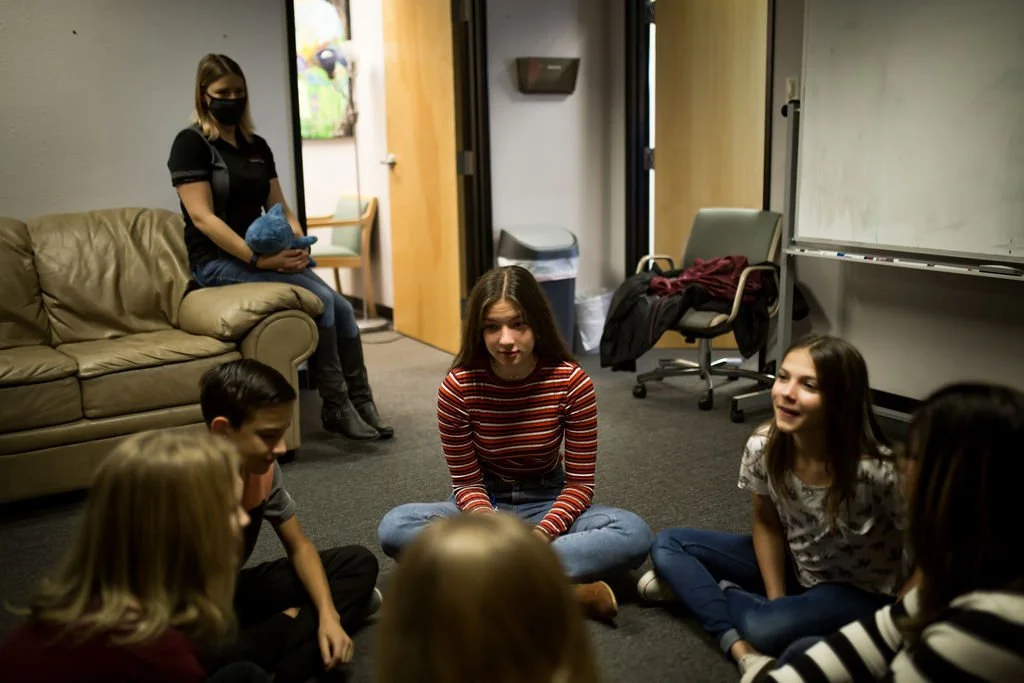
Social Skills group
Target Population: Ideal for children struggling with self-regulation, sensory needs, impulsivity, or navigating social situations.
Key Learning Objectives:
Identifying Emotions: Increasing emotional vocabulary and recognizing facial expressions.
Self-Regulation Tools: Developing strategies to shift between zones (e.g., deep breathing, sensory tools, cognitive strategies).
Social Behavior Mapping: Understanding how one's behavior affects others' thoughts and feelings, and the distinction between expected/unexpected behaviors.
Structure: Often runs as a 10-week group, with sessions lasting about 60-90 minutes, allowing for consistent, developmental, and interactive practice.
Expected Outcomes:
Participants gain a common language for identifying feelings, improved impulse control, enhanced empathy, and increased "in-the-moment" ability to regulate their state for improved social interaction.